Where to stay in Kyoto can come with a particular kind of tired. Every list gives you a different answer. Stay in Gion for atmosphere. Stay near the station for convenience. Stay in Arashiyama for the bamboo grove at dawn. By the third list, the choice starts to feel less like planning and more like guessing.
The honest answer is that there is no single correct area, only the one that matches how you actually want to spend your mornings and evenings this particular autumn. Once that becomes the question, the choice gets considerably easier to make.
Why Where to Stay in Kyoto Matters
Kyoto is not built the way most cities are. Its most recognisable temples and gardens are spread across a wide valley rather than clustered around a single centre, and the subway network covers only two lines, one running north to south, one running east to west, crossing once near the middle of the city. Almost everything else, Higashiyama, Arashiyama, Fushimi, the northern temples, sits beyond those two lines entirely, which is why Kyoto leans on buses more heavily than almost any other major Japanese city.
That single fact shapes far more of a trip than most itineraries admit. A hotel a few hundred metres from a bus stop can still mean twenty minutes standing among a full bus of visitors before a temple gate even comes into view. A hotel within walking distance of the same temple can mean arriving on foot in the quiet hour after opening, while the buses are still filling up elsewhere. The distance on a map rarely tells you which of those two mornings you are choosing.

There is a change coming to this picture worth knowing about now, even though it will not affect an autumn 2026 trip directly. Kyoto’s mayor announced a proposed two-tier bus fare in February 2026, which would keep the fare at 200 yen for residents using a linked transit card while charging visitors and other non-residents somewhere between 350 and 400 yen per ride. The plan is still working through the city assembly and national approval, with a rollout targeted as early as April 2027, so nothing changes for this season. But it signals a direction. Kyoto is actively trying to shift visitors away from bus dependency, and choosing a base that leans on trains, subway or simply walking is becoming the more future-proof habit rather than only this year’s convenience.
Step-by-Step Plan
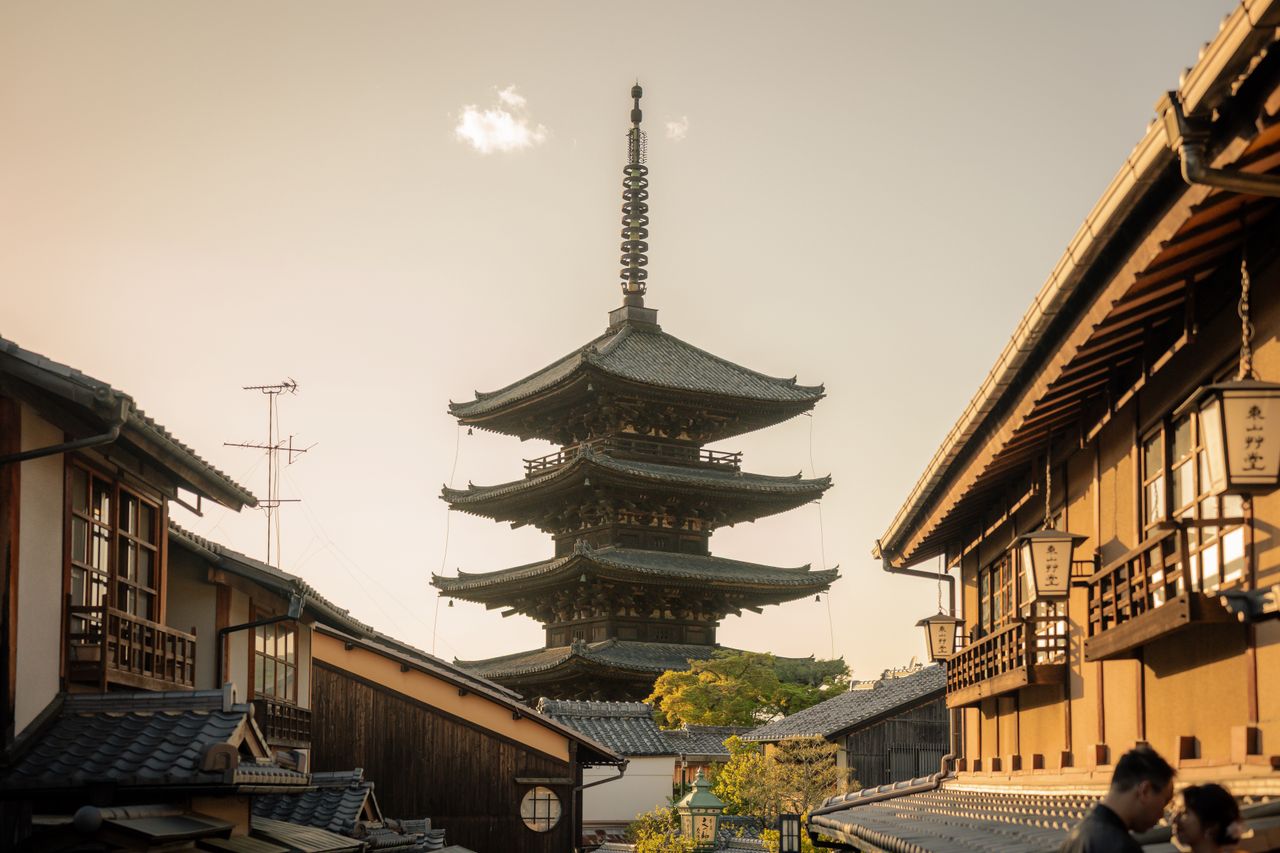
Start by being honest about what kind of mornings you actually want. If the plan is to be inside a temple gate before the crowds arrive, Higashiyama is difficult to beat as a base. Staying anywhere near Gion, Kiyomizu-Gojo or Kiyomizu-dera itself means Kiyomizu-dera, Kodai-ji and Yasaka Shrine are all within walking distance, which removes the bus entirely from the equation for a pre-breakfast visit. It also means the temples’ autumn illumination evenings, Kiyomizu-dera’s short window from 21 to 30 November and Kodai-ji’s longer run from 23 October to 13 December, are a short walk home rather than a scramble for a returning bus at closing time. The area is also reachable by the Keihan Line, which runs along the eastern edge of the city through Gion-Shijo and Kiyomizu-Gojo stations, giving a genuine train alternative to the bus routes that get most congested during peak foliage.

If the trip includes day excursions to Nara, Uji or Osaka, the area around Kyoto Station earns its convenience honestly. It has the largest concentration of hotels at every price point, direct JR and Kintetsu connections for day trips, and no need to cross the city to begin a morning elsewhere. What it does not offer is atmosphere. Evenings here feel like any transit hub in Japan rather than the old capital, and getting to Higashiyama or Gion for an evening illumination still means a bus or a short train transfer each way.
For a traveller who wants a middle position rather than a strong lean either way, the Kawaramachi and Shijo-Karasuma area sits close to where the Karasuma and Tozai subway lines cross, with the Kamo River, Nishiki Market and Gion all within a comfortable walk. It trades a little of Higashiyama’s immediacy for genuine flexibility, since both subway lines and a wide spread of restaurants sit on the doorstep, and it tends to have a broader spread of accommodation prices than the more sought-after eastern neighbourhoods.
Arashiyama deserves a specific mention, because it works well as a base for exactly one reason and poorly for most others. The bamboo grove and Togetsukyo Bridge are at their best in the very first hour of the morning, before the day-trip buses and trains from central Kyoto arrive, and staying overnight in Arashiyama is the only way to reliably have that hour to yourself. Outside of that early window, the area is some distance from almost everything else on a typical Kyoto itinerary, connected mainly by the Randen tram and the JR Sagano line rather than the subway, so it suits a traveller building a slower, less centralised trip rather than one trying to cover the city efficiently.
The quieter northern area around Kinkaku-ji and Kitayama is worth considering for a traveller who has already spent time in Kyoto before, or who simply wants lower prices and a more residential pace in the evenings. It comes with a trade-off worth being clear-eyed about: almost everything east of here requires a bus, and during peak foliage those routes are among the most heavily used in the city.
There is also a quieter alternative worth knowing about, the area around Kyoto Gosho and Nijo Castle. It sits close enough to the centre to reach Nijo Castle, the Imperial Palace grounds and Kitano Tenmangu without difficulty, yet the streets themselves feel considerably calmer than Higashiyama or the station district. The Tozai subway line runs through the area and the JR Sagano line sits within reach too, which keeps it genuinely well connected despite the slower pace. It suits a traveller who wants a Kyoto morning that begins somewhere unhurried rather than one built entirely around proximity to the most photographed streets.

For a longer stay, or a trip built around slowness rather than coverage, it is worth looking further out still. Ohara, Kurama and Kibune sit in the hills north of the city and offer a genuinely different rhythm, mountain scenery and autumn colour without the crowds that gather around the famous central temples. Fushimi, in the south, gives easy access to Fushimi Inari and its own quieter evenings once the day-trippers head back into town. None of these are efficient bases for a traveller trying to see as much of Kyoto as possible in a short window, and each adds a longer journey into the centre most days. They reward a different kind of trip, one where a couple of unhurried days matter more than covering ground.
What to Book
Once the area is decided, accommodation in Kyoto’s autumn season fills quickly, particularly anywhere within walking distance of Higashiyama’s temples, so it is worth securing a room well before the final weeks of the season rather than treating it as a task for closer to the date.
Kyoto hotels and accommodation search by neighbourhood
A guided orientation walk on the first morning, particularly through Higashiyama or Gion, can shorten the learning curve of a new area considerably, turning a first, slightly disoriented day into one that already has a sense of direction.
Kyoto orientation walking tour / Higashiyama-Gion experience
If Higashiyama or Gion is the chosen base and an evening illumination visit is part of the plan, booking that experience ahead of arrival avoids the disappointment of a fully booked slot on the night itself.
Kyoto evening illumination experience
For arrivals into Kansai Airport, a private transfer timed to reach the chosen neighbourhood directly can be worth the cost after a long flight, particularly for a base like Arashiyama or the northern temples that sit further from the standard airport limousine bus routes.
Kansai Airport to Kyoto private transfer
Practical Tips
An IC card, ICOCA or Suica, loaded before or shortly after arrival makes every bus, subway and train ride considerably smoother than buying individual paper tickets, and it works interchangeably across Kyoto’s bus and rail network regardless of which area is chosen as a base.
Kyoto’s accommodation tax also changed on 1 March 2026, moving from three tiers to five, based on the nightly room price per person. A room under ¥6,000 carries a ¥200 tax, ¥6,000 to just under ¥20,000 carries ¥400, ¥20,000 to just under ¥50,000 carries ¥1,000, ¥50,000 to just under ¥100,000 carries ¥4,000, and anything ¥100,000 or above carries the full ¥10,000 per person, per night. It is worth factoring into the total cost comparison between neighbourhoods, since the tax is charged on top of the room rate and rarely appears in the price shown at the point of booking, and a slightly higher headline rate in a more expensive tier can change the total more than the room price difference alone suggests.
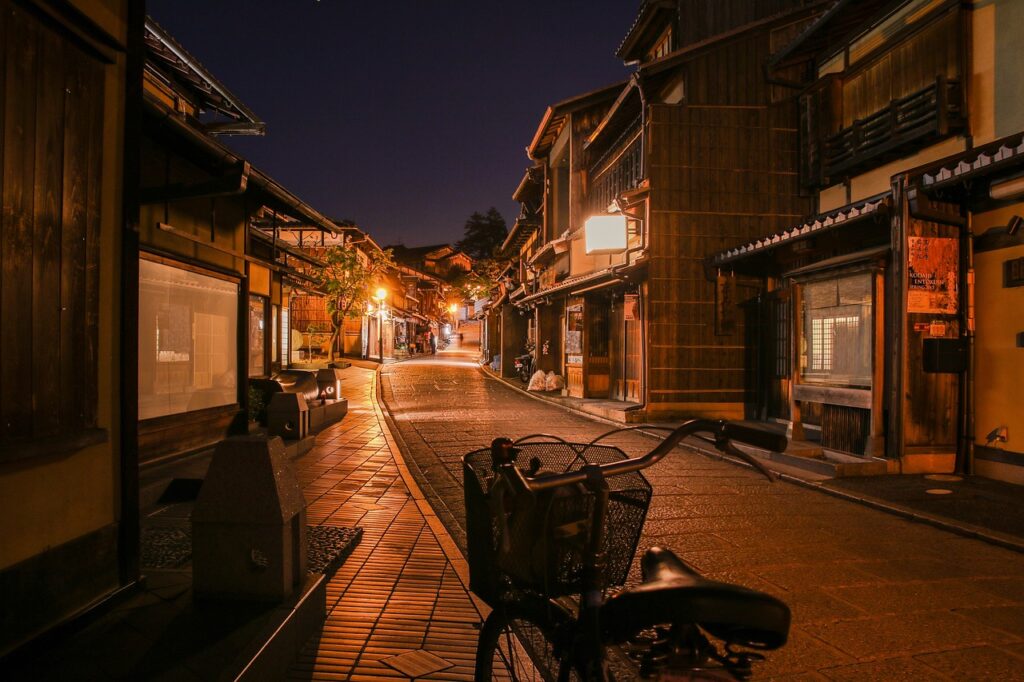
When comparing listings within the same area, check the actual walking distance to the nearest subway or Keihan station rather than relying on the neighbourhood name alone. Gion and Higashiyama both cover a wide area, and a ten-minute difference in walking distance can be the difference between a genuinely quiet morning and one spent waiting for the first bus.
Travelling with a large suitcase changes this calculation more than it might seem. Kyoto has same-day luggage delivery and storage services that can send bags ahead to a hotel or the airport, and using one can make the difference between an area feeling conveniently close and feeling like a slog on arrival day.
It is also worth remembering that many of Kyoto’s most photographed streets are ordinary residential neighbourhoods for the people who live there. Staying in a quieter area comes with the same responsibility as visiting one, keeping noise down late in the evening, taking rubbish with you, and treating the street as somebody’s home rather than an extension of the sightseeing.
Related Guides
Kyoto in Autumn covers the foliage timing and illumination dates that make the case for choosing a base carefully in the first place, and
Tokyo Through Taste offers a starting point for anyone pairing this trip with time in Tokyo.
This post contains affiliate links to Klook. If you book through these links, Rianway Travel earns a small commission at no extra cost to you. We only recommend experiences and partners we genuinely believe in.
Please Follow us on Facebook, and Pinterest for more amazing insights and tips.