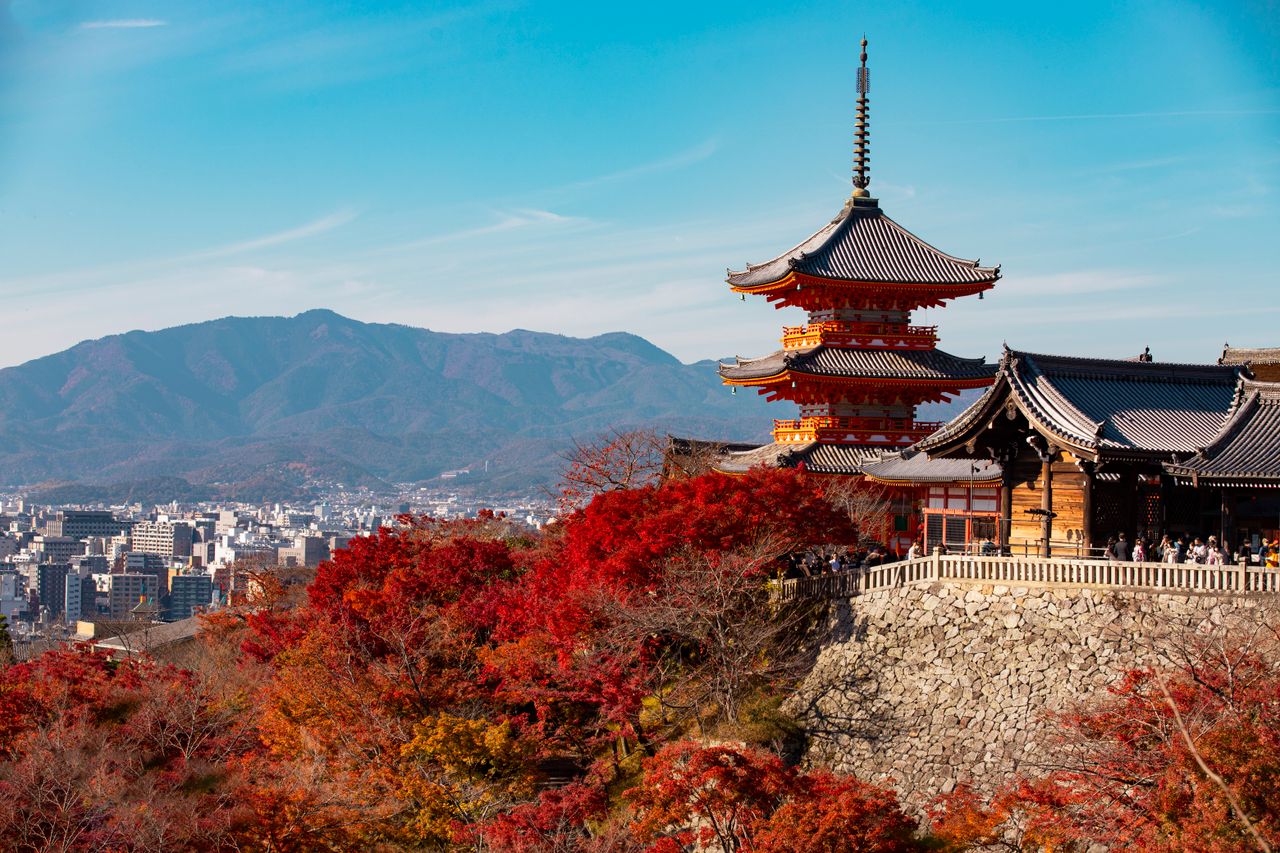
There is a version of Kyoto that lives in your head before you ever arrive. A temple roof under a canopy of red maple leaves. A quiet stone path disappearing between the trees. Mist that seems arranged rather than weathered, as though someone had asked the weather to cooperate for the photograph. It is the image that makes you open a flight search before you have even checked the price.
Then you start reading about November in Kyoto, and the picture changes shape. Buses that fill before they reach your stop. Queues outside temple gates before the gates have opened. Hotel rates that climb the closer the season gets. Visitors arriving before sunrise simply to stand somewhere for a few minutes without anyone else in the frame.
So the question shifts. Not whether Kyoto is beautiful in autumn, because it is, but whether that beauty is worth meeting on its busiest terms. The answer has less to do with the season itself and more to do with how you choose to move through it, and that is the part most itineraries skip entirely.

Why Kyoto in Autumn Matters
Kyoto’s autumn crowding is not evenly spread, and that single fact changes how the season should be approached. One street can be shoulder to shoulder while the next, only a few minutes’ walk away, feels almost residential. A famous temple can be overwhelmed at midday and unrecognisably calm two hours earlier.
Kyoto’s own tourism authority has spent recent seasons building visitor information and congestion guidance specifically to help travellers spread across the city rather than converge on the same few streets at the same few hours, which tells you the unevenness is well understood locally, even if it rarely makes it into a first-time itinerary.
That unevenness is the opening. It means the season does not need to be avoided, only read more carefully. Kyoto in autumn rewards travellers who treat timing as part of the experience rather than an inconvenience standing between them and the leaves, and it quietly punishes the ones who try to see everything on the busiest possible schedule.
There is also a specific timing detail worth knowing before anything else is booked. Japan Meteorological Corporation released its first 2026 autumn foliage forecast on 2 September, and it places Kyoto’s red-leaf peak around 11 December, roughly six days later than the city’s long-term average and notably later than Tokyo, which is forecast to peak around 29 November this year.
Forecasts of this kind are revised through the season as temperatures become clearer, so this is a starting point rather than a fixed date, but it is enough to reshape how a late-2026 Kyoto trip should be framed. A booking built around the final week of November on the assumption that it guarantees peak colour may, this particular year, land slightly early.
There is a deeper layer beneath the scenery too, one that rarely makes it into a foliage guide. Every temple garden, every carefully placed maple beside a stone lantern, is the result of centuries of deliberate design, not accident. Kyoto’s relationship with autumn was never left to chance, and travelling through it with even a little of that context changes what you notice. The crowds gathering at a particular viewpoint are usually gathering there for a reason that predates tourism altogether.
Step-by-Step Plan
Begin with the window, not the date. Kyoto’s foliage rarely arrives on a single day. Higher ground tends to turn earlier, while many of the city’s lower-lying gardens and temple grounds hold their colour later into the season, sometimes into mid-December. Treat late November through mid-December as the working range for 2026, and check the forecast again as departure approaches, since conditions through October and November will sharpen the picture considerably by the time you need to commit to a final itinerary.
Once the window is set, think about the hours within each day rather than only the days themselves. Arriving at a well-known temple in the first hour after opening rarely guarantees solitude during peak colour, but it meaningfully improves the odds, and there is a particular quality to Kyoto in early morning that has nothing to do with crowd size at all. The light softens before it sharpens. Shopkeepers are only just opening their shutters. Cyclists move through streets that will be impassable by midday. The city feels, briefly, like a place people live in rather than a place people visit, and that alone is worth setting an early alarm for.
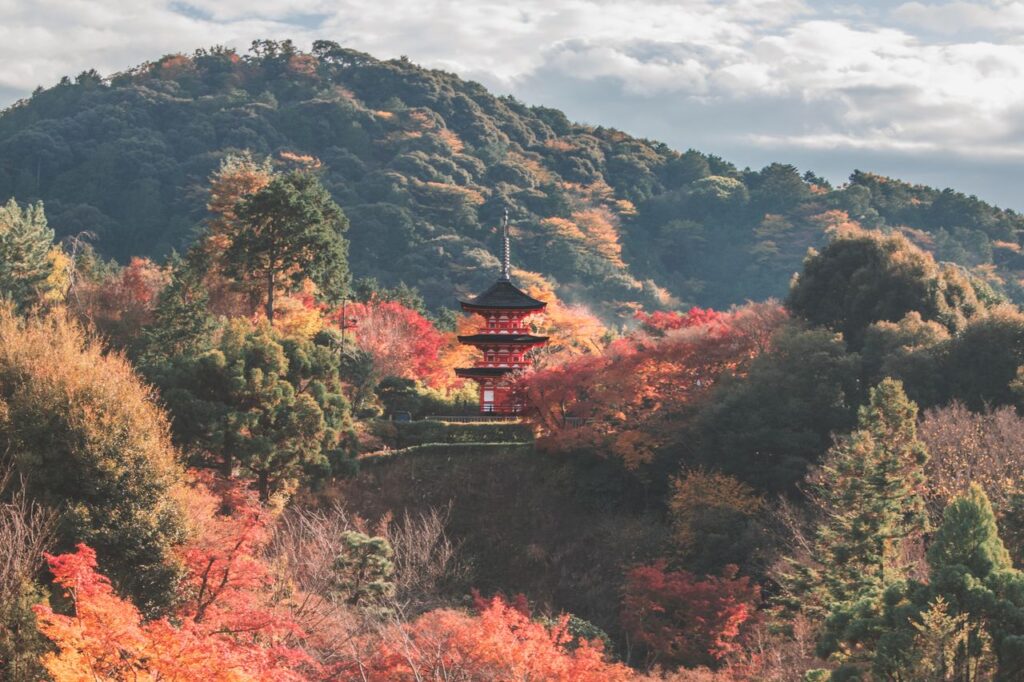
Resist the instinct to schedule every hour. An itinerary that reads beautifully on paper, with a temple at eight, a shrine at half past nine, a market at eleven and Arashiyama by one, rarely survives contact with a real day in a real city, and trying to force it tends to produce exhaustion rather than memory. One temple experienced slowly stays with a traveller longer than five visited quickly. Leave room for the parts of the day that were never on the list: a tea break that runs longer than planned, a narrow street that turns out to be worth following simply because it looked quiet, half an hour spent sitting beside a garden with no particular reason to move on.
Group your destinations geographically rather than chasing every well-known name across the city in a single day. Kyoto’s public transport network is extensive, but its busiest routes slow considerably once visitor numbers rise, particularly through Higashiyama and around Arashiyama, and a day built around crossing the city repeatedly tends to lose more time to buses than it gains in sights. Walking between nearby places, and choosing trains over buses where the route allows it, tends to make for a calmer and a more genuinely productive day.
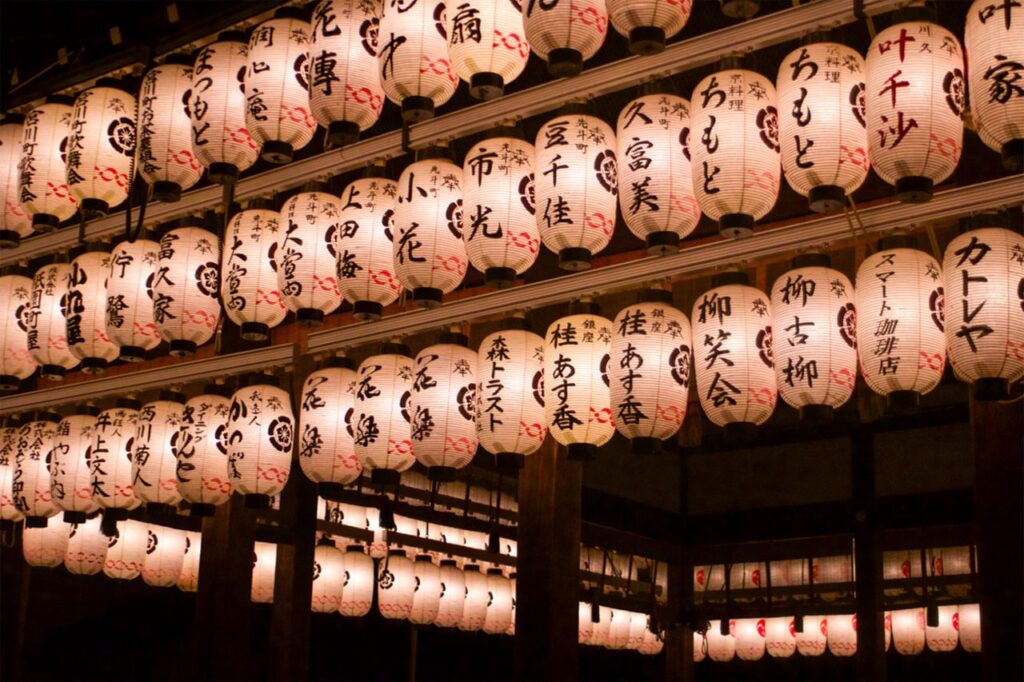
Consider the evening as its own opportunity rather than an afterthought squeezed in before dinner. Several of Kyoto’s temples hold seasonal illumination events once the sun goes down, transforming familiar gardens into something quieter and considerably more atmospheric than their daytime version. Kiyomizu-dera has confirmed a special autumn night viewing from 21 to 30 November 2026, a notably short window worth building a specific evening around rather than assuming it will still be running later in your trip. Kodai-ji, a short walk away through the Sannenzaka and Ninenzaka lanes, runs a longer illumination period from 23 October to 13 December, which makes it a more forgiving option if your dates fall earlier or later in the season.
To-ji, further south near Kyoto Station, has confirmed its own autumn illumination from 31 October to 13 December, with the temple’s Golden Hall and Lecture Hall open for special evening viewing alongside the lit grounds. Event details and hours are worth checking again closer to your dates, since venues occasionally adjust their schedules once the season is underway, but an evening spent this way often produces a version of Kyoto that the daytime crowds simply do not allow.
Finally, decide where to base yourself with real thought rather than convenience or price alone. A hotel that saves money but adds forty minutes of crowded transport each morning rarely feels like a saving after the third early start of the trip. A well-connected neighbourhood, not necessarily beside the most photographed attractions, tends to offer the better balance of cost, atmosphere and ease of movement, and it is worth weighing that balance before the accommodation search narrows to price alone.
What to Book
Arashiyama remains one of the season’s most recognisable draws, and its popularity is well earned rather than overstated, but it rewards an early arrival more than almost anywhere else in the city. A guided walking experience through the bamboo grove and the surrounding temple gardens can also change the shape of a visit considerably, turning a walk between photographs into something with proper context behind it, particularly around the area’s less obvious historical layers.
AFFILIATE PLACEHOLDER: Kyoto guided walking tour / Arashiyama experience – insert Klook or GetYourGuide affiliate link
An evening illumination visit is worth booking as its own occasion rather than treating it as something to fit in before dinner, particularly at a temple like To-ji or Kodai-ji, where the light-up season runs across most of autumn. Checking admission arrangements and whether advance booking is required will save any disappointment on the night itself, especially at venues known to queue heavily by early evening.
AFFILIATE PLACEHOLDER: Kyoto evening illumination experience / Higashiyama night walk – insert Klook or Tiqets affiliate link
Because autumn is Kyoto’s most in-demand season, accommodation is worth securing well ahead of the final weeks, particularly if your dates sit anywhere near the forecasted peak or in Higashiyama, where the evening illuminations draw an additional wave of visitors after dark.
Kyoto hotels and accommodation
For travellers building a longer Japan route around this trip, a wider look at flights, transfers and travel insurance is worth arranging early, since prices and availability tend to tighten as the season approaches and Kyoto pulls demand from across the wider region.
Kyoto or Osaka airport transfer
Practical Tips
Kyoto revised its accommodation tax structure from 1 March 2026, moving from a three-tier system to five tiers based on nightly room price. The lower tiers have shifted only slightly, but the top tier, covering stays of ¥100,000 or more per person per night, now sits at ¥10,000 per person, per night, roughly ten times the previous top rate.
This is not a reason to avoid Kyoto, but it is worth factoring into a total trip cost rather than comparing headline room rates alone, particularly for anyone considering a higher-end stay during peak season, since the tax is charged per person, per night, and is rarely included in the rate shown at the point of booking.
Illumination dates and hours are set by each temple individually and can shift once the season is underway, so it is worth checking the specific venue’s official page in the fortnight before your visit rather than relying on any single published schedule, this one included.
If central Kyoto begins to feel overwhelming partway through a trip, Uji and Nara sit close enough to offer a genuine change of pace without leaving the region behind. Both make for a natural second or third day, giving a longer trip some breathing room rather than adding another crowded corridor to an already full itinerary.
Some of the links above are affiliate partnerships, which means a small commission may be earned at no extra cost to you, used to support the ongoing research behind this guide.
Related Guides
Tokyo Through Taste offers a starting point for anyone pairing Kyoto with time in Tokyo.
Where to stay in kyoto where to stay in autumn for every traveller type
This post contains affiliate links If you book through these links, Rianway Travel earns a small commission at no extra cost to you. We only recommend experiences and partners we genuinely believe in.
Please Follow us on Facebook, and Pinterest for more amazing insights and tips.