
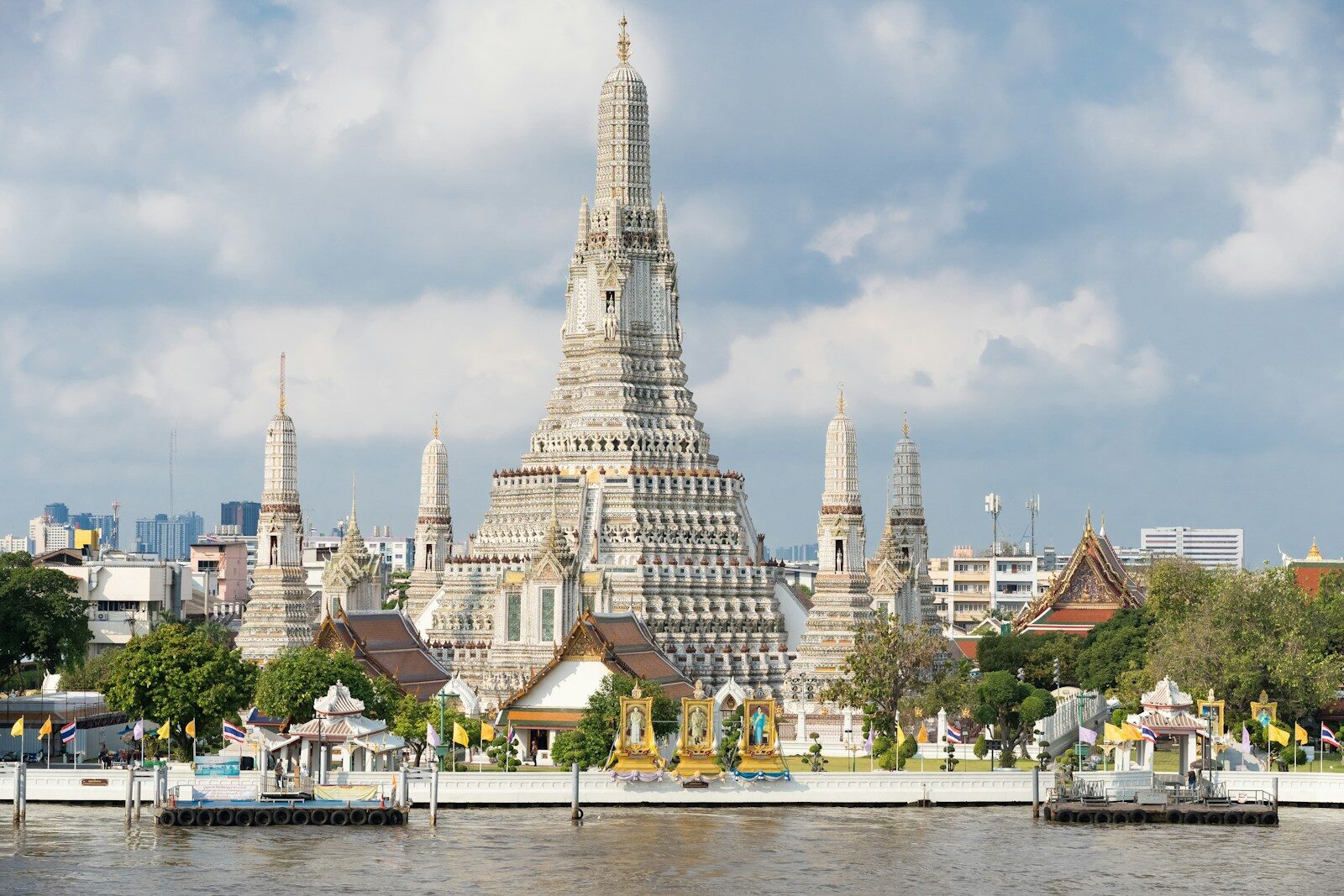
Most people arrive in Bangkok braced for the chaos. They leave having only ever seen the surface of it. This guide is for the traveller who wants to go deeper and come home changed.
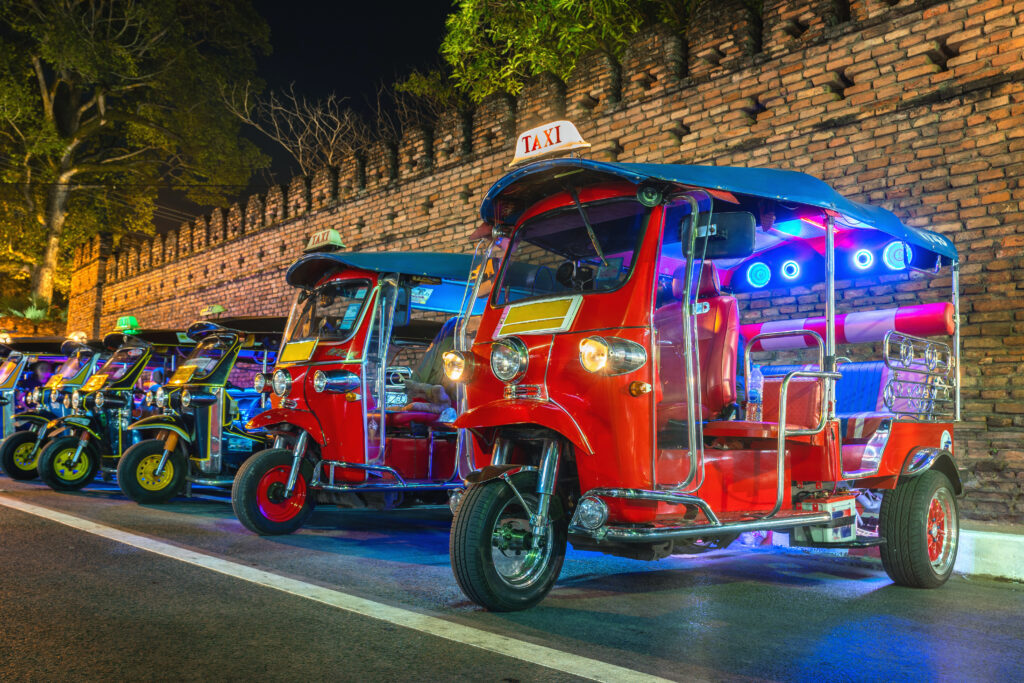
Bangkok does not ease you in. It arrives all at once, the heat pressing down before you’ve left the airport, the sky thick with the smell of jasmine garlands and two-stroke engines, tuk-tuks threading between lanes that seem to operate on instinct rather than logic. Every travel guide will tell you to brace yourself. Most of them are wrong about what comes next.
Because Bangkok, when you stay long enough in one place to actually feel it, is one of the most generous cities in the world. It rewards the traveller who slows down, who chooses one neighbourhood over five, who eats where the plastic stools are already full at eleven in the morning. It rewards, in other words, the intentional traveller.
This guide is not a list of everything Bangkok can offer. It is an invitation to choose less, go deeper, and leave with something that lasts longer than photographs.
Why This Matters
Travel to Southeast Asia has never been more accessible, or more homogenised. The same rooftop bars appear in the same Instagram grids. The same tuk-tuk tours follow the same route. The same temples get photographed from the same angle at the same hour of the morning. There is nothing wrong with any of this, and yet something important gets lost when a city becomes a checklist.
Bangkok deserves better than that. It is a city of layers, royal and gritty, devout and hedonistic, ancient and relentlessly modern, and those layers only reveal themselves when you give the city time. When you choose a single canal neighbourhood and spend a morning walking it slowly. When you sit in a temple courtyard until the tourists have moved on and the monks have returned. When you book experiences that put you in conversation with the city rather than simply in front of it.
Travelling in Bangkok with intention means arriving with a different kind of question. Not what can I see, but what do I want to understand. The difference in what you come home with is remarkable.
How to Experience Bangkok with Intention
The instinct in Bangkok is to move. To get from the Grand Palace to Chatuchak to Khao San Road to a rooftop bar in Silom before the day is out. Resist this. The city is not going anywhere, and neither are you, at least not yet.
Choose one neighbourhood as your anchor
Staying in or near Banglamphu gives you the old city on foot. Ari and Ekkamai are calmer, residential, and beloved by the city’s own creative class. Riverside puts you close to the water and the temples without the tourist density of Khao San Road. Wherever you base yourself, commit to it for at least two nights. Walk it slowly on your first morning before you go anywhere else.
Build mornings around temples, afternoons around markets
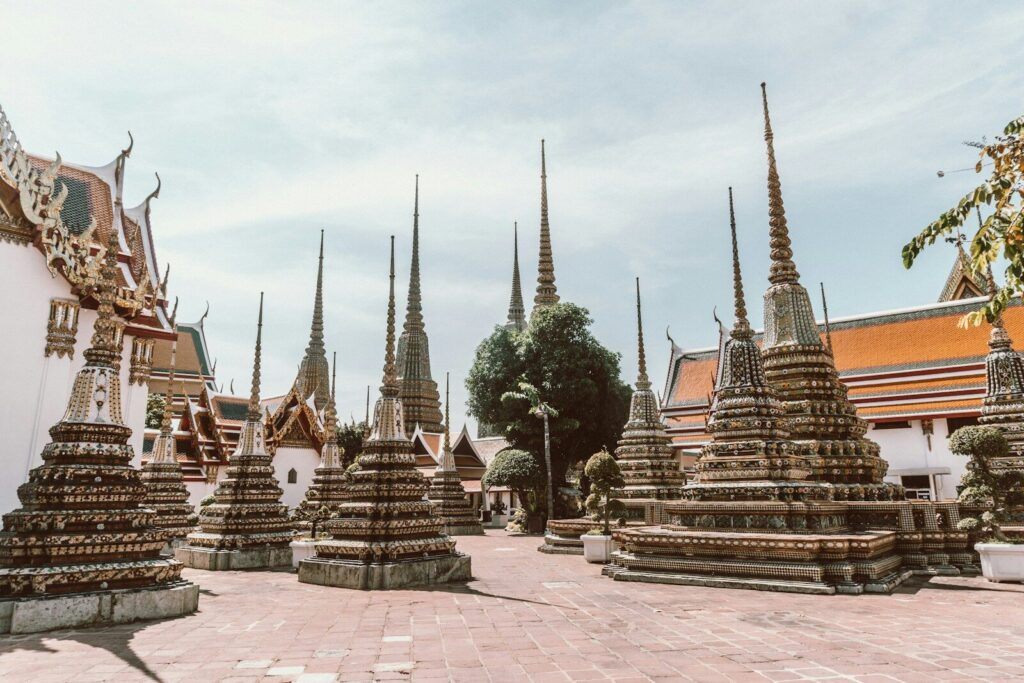
Wat Pho in the early morning, before ten, is a different place from Wat Pho at noon. The light is softer, the crowds are thinner, and the monks are present in a way they are not when the tour groups arrive. Give yourself at least an hour. Sit with the reclining Buddha rather than photographing it and moving on. Let the scale of it register.
Afternoons are for Or Tor Kor market, for the flower market at Pak Khlong Talat, for the backstreets of Chinatown where entire families run businesses from shophouses barely wider than a doorway. This is where the city’s texture lives.
Eat as a practice, not a task
Bangkok’s street food is genuinely one of the great culinary traditions of the world, and the best of it is eaten standing up, at plastic tables, with no English menu. Find a stall you like and come back twice. Ask for the thing the person in front of you just ordered. Let a meal take an hour rather than twenty minutes. Food in Bangkok is not fuel, it is conversation, ceremony, and care made edible.
Where to Stay in Bangkok
The neighbourhood you choose shapes the entire texture of your trip. For intentional travel, the question is not which hotel has the best pool; it is which base keeps you closest to the city as it actually lives.
Riverside and Rattanakosin put you within walking distance of the oldest temples and the canal network. Ari and Ekkamai are quieter and more residential, ideal if you want to feel what Bangkok is like for the people who actually live there. For first-time visitors, somewhere between Silom and the river gives you access to both the historical and the contemporary without requiring a taxi every time you want to leave.
Browse accommodation options below — the widget surfaces a curated range of stays across Bangkok’s neighbourhoods, filtered for location and value.
What to Book Before You Arrive
Bangkok rewards spontaneity, but a handful of experiences are better pre-arranged, both because they book out and because having them in place gives your itinerary a spine to build the rest of the trip around.
See the city by private sightseeing car
There is something to be said for arriving in a new city and seeing it first from inside a car with someone who knows it. Welcome Pickups’ Bangkok sightseeing rides do exactly this, a private, unhurried tour of the city’s key landmarks with a local driver who can answer the questions no guidebook thinks to include. It removes the overwhelm of the first day and gives you a mental map you can navigate from instinctively for the rest of your trip.
Bangkok Sightseeing Ride — ‘Book a private sightseeing car with Welcome Pickups’
Klook experiences worth booking
Klook’s Bangkok offering is broad, but these are the experiences that align with intentional travel, ones that put you in genuine contact with the city rather than simply in front of it.
Klook Experience 1 — Bangkok Temple Tour: Grand Palace, Emerald Buddha, Wat Pho, Wat Arun. If you want to experience Bangkok’s iconic landmarks without the stress of planning, this guided tour brings clarity, efficiency, and cultural depth in one seamless day.
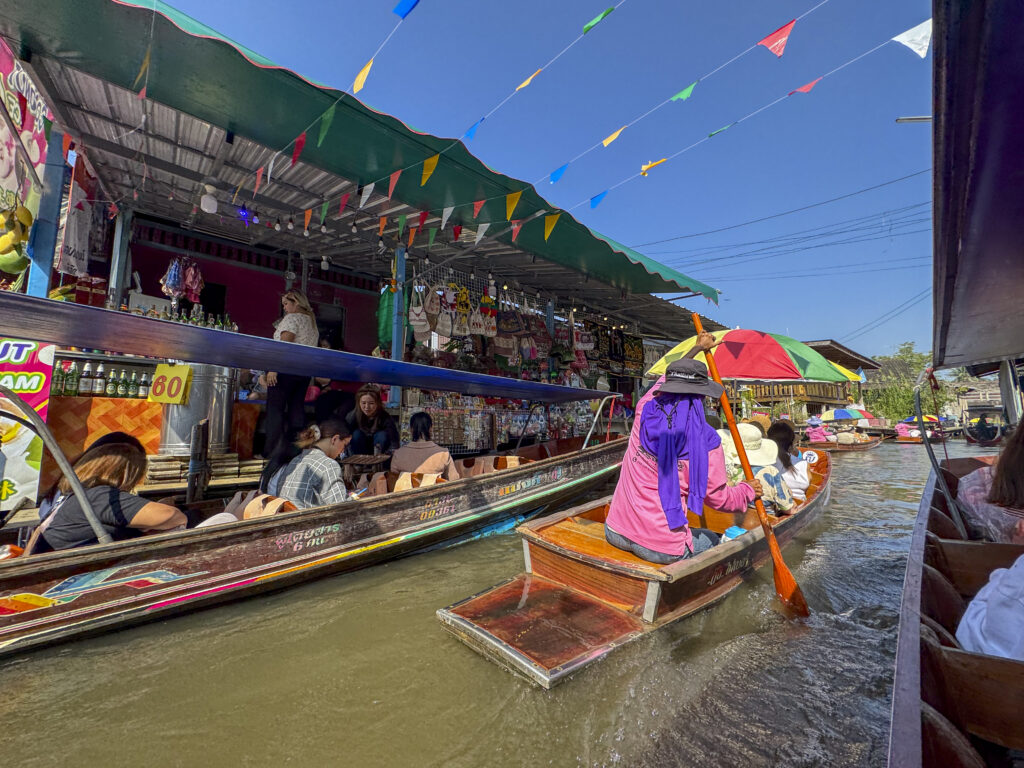
Klook Experience 2 — Damnoen Saduak Floating Market & Maeklong Railway Market Day Tour. This full-day experience removes the guesswork from market visits, connecting you to the vibrant floating stalls of Damnoen Saduak and the unforgettable Maeklong Railway Market with purpose and ease.
Klook Experience 3 — Thai Bus Food Tour Experience in Bangkok. Taste your way through Bangkok with ease, this guided bus experience combines iconic city sights with carefully curated local eats, helping you explore flavour and culture without the guesswork.
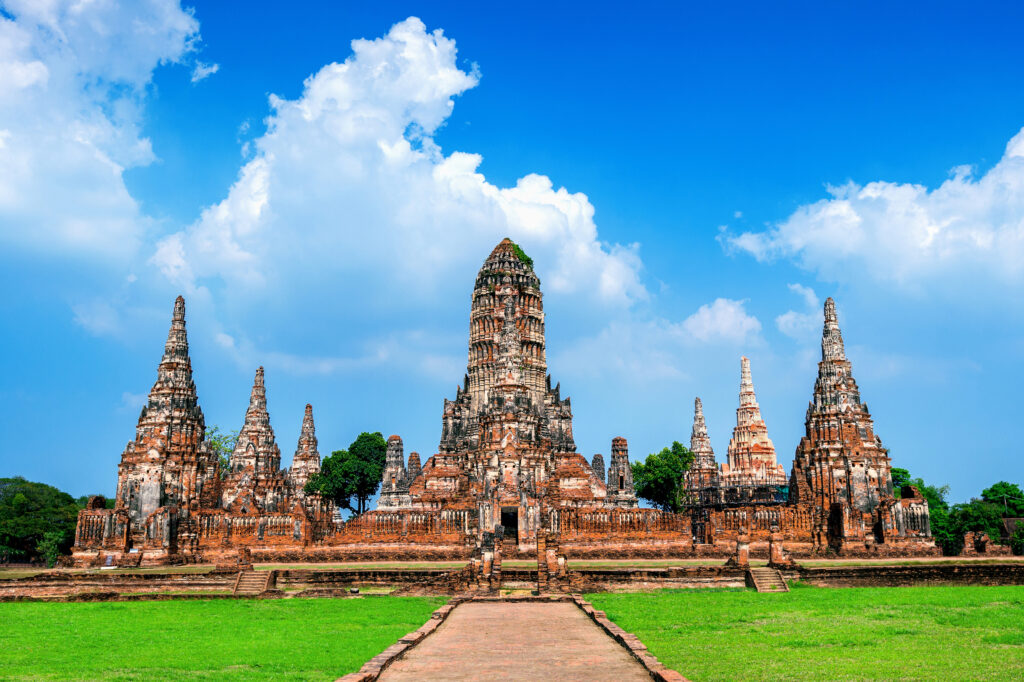
Klook Experience 4 — Ayutthaya Historical Park & Bang Pa-In Royal Palace Full-Day Tour.
All experiences above can be browsed and booked through Klook. Booking in advance, especially for anything temple-based or food-focused, is strongly recommended during Bangkok’s peak season (November to February).
Practical Tips for Bangkok
Getting around
The BTS Skytrain and MRT metro are clean, air-conditioned, and far faster than road transport for most cross-city journeys. Grab (Southeast Asia’s equivalent of Uber) is reliable and affordable for shorter trips and beats negotiating tuk-tuk fares as a tourist. For the canals, the Chao Phraya Express Boat is one of Bangkok’s great pleasures, slow, scenic, and used by commuters rather than tourists. Take it at least once in each direction.
When to visit
November to February is Bangkok at its most comfortable; the heat is still present, but the humidity drops, and the sky stays clear. March and April are the hottest months, culminating in Songkran (Thai New Year) in mid-April, which transforms the city entirely. May through October is monsoon season: hot, wet, and punctuated by afternoon downpours that clear within the hour. There is no wrong time to visit, only different versions of the same city.
What to keep in mind
Dress modestly when visiting temples, covered shoulders and knees are required, and sarongs are usually available to borrow at the entrance. Remove your shoes without being asked. Speak quietly. The Thai concept of sanuk, the idea that everything should contain an element of joy and lightness, extends to the way tourists are expected to move through sacred spaces. Respectful and unhurried is the right register.
Tipping is not obligatory but is genuinely appreciated. A small amount left at a food stall or street cart is noticed and remembered in a way that a glossy restaurant tip rarely is.
Related Guides
Meaningful Travel: How to Plan Purposeful Adventures
Coming soon on Rianway Travel:
Getting Around Bangkok Without the Stress
Bangkok with Kids: How to Travel Slowly When Little Ones Set the Pace
After Dark in Bangkok: Where Intentional Travellers Actually Go at Night
This post contains affiliate links to Klook, Welcome Pickups, and Stay22. If you book through these links, Rianway Travel earns a small commission at no extra cost to you. We only recommend experiences and partners we genuinely believe in.
Please Follow us on Facebook, and Pinterest for more amazing insights and tips.
Leave a Reply
You must be logged in to post a comment.